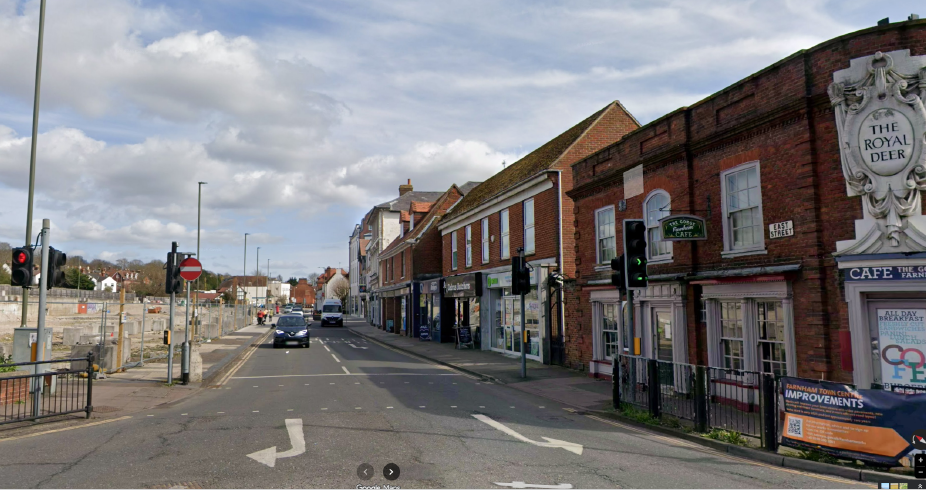
In May 2026, the Farnham Herald published a vision for the redevelopment of the Woolmead site, with pedestrianisation of the section of East Street separating Woolmead and Brightwells.


This was to be achieved by making Woolmead Road two way.

The pedestrianised stretch of East Street would form a Piazza, which could be used for public events.
It would additionally create a link between Woolmead and Brightwells.
Experience has shown that Brightwells Yard does attract footfall, and is often seen largely deserted. This is in part a result of lack of connectivity with the rest of the town centre. There is no ‘statement’ entrance. A pedestrian Piazza could form an entranceway, facilitating pedestrian flow into Brightwells from East Street. The eastern part of the town centre could then be made to function as an integrated zone, rather than a collection of discreet unconnected parts.
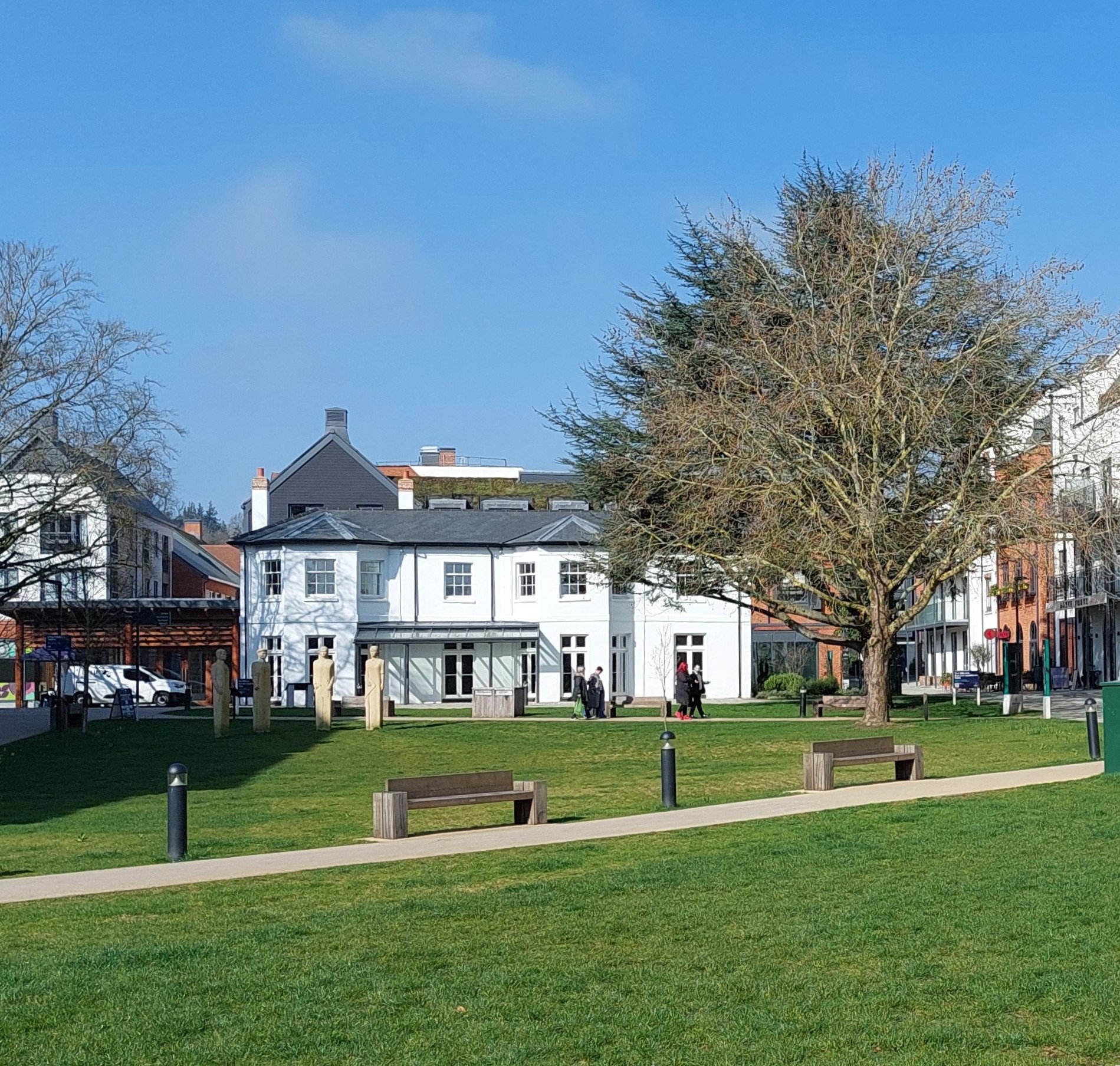
In September, Farnham Theatre Association (FTA) gave a presentation in Creative Space, Brightwells, showing how a theatre could be added to a redeveloped Woolmead, accessed from the pedestrian Piazza. This was followed up with a public forum, at the Museum Garden Gallery, to discuss the vision.
The recent Food Festival (Sunday 27 September) used Brightwells Yard to accommodate food stalls – unlike in previous festivals, where Castle Street had been used.

The section of East Street adjacent to Brightwells was temporarily closed to traffic, thus enhancing pedestrian flow in the eastern part of the town centre.

This relocation provided the town with a undeniable proof of concept. By closing East Street to cars, pedestrians completely reclaimed the space. It was a resounding success that solved a persistent problem: it organically guided crowds down the narrow lane straight into Brightwell Square.
When the Brightwells scheme was first proposed, The Farnham Society warned that it would create two separate retail areas in the town – the established centre in The Borough, Castle Street, Downing Street and West Street – plus the new Brightwells centre. Experience shows that only one of the two centres is likely to survive — leaving a prosperous historic core but an isolated, desolate development at the East End.
This real-world experiment during the Food Festival directly validates the proposal to pedestrianise East Street and give a pedestrian gateway into Brightwells. It demonstrates that Brightwells does not have a viability problem; it has a visibility and connectivity problem. With good pedestrian access it can thrive.
One negative comment about the Festival was that other parts of the town, notably around Castle Street, became blocked by diverted traffic. This would be addressed by another part of the stated vision, namely making Woolmead Road two way, so as to allow traffic to flow both eastwards and westwards in the eastern part of the town centre.